Aramco and Maaden target copper across vast Saudi exploration zone
Subscribe to our free newsletter today to keep up to date with the latest mining and minerals news.
Saudi Aramco and mining company Maaden plan to form a joint venture to search for copper and other minerals across an area covering almost 10% of Saudi Arabia.
The agreement combines Maaden’s mining and exploration experience with more than 90 years of geological and geophysical data collected by Aramco during its search for oil and gas.
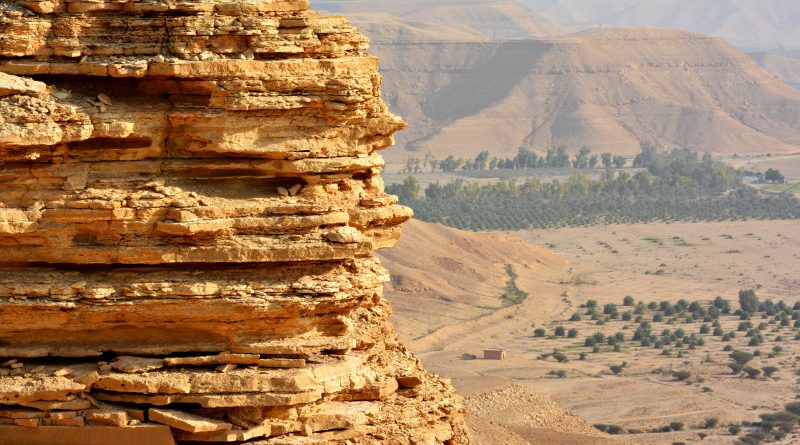
The venture will focus on a 182,000-square-kilometer area known as Zone-4, or the Transition Zone, within the Arabian Platform. The zone runs parallel to the Arabian Shield and is about 100 kilometers wide.
Copper will be the main target. The companies will also search for zinc, lead and rare earth elements.
Maaden is expected to own 51% of the new company, with Aramco holding 49%. The companies first announced plans for the venture in January 2025. Its formation remains subject to corporate and regulatory approvals, including antitrust clearance.
The scale of the exploration area is significant. But the wider test will be whether Saudi Arabia can use decades of oil-sector knowledge to improve the way it searches for minerals.
Oil-sector data could change how Saudi Arabia searches for minerals
Mineral exploration can be costly and uncertain. Companies may spend years collecting geological data, running surveys and drilling before they know whether a deposit could support a commercial mine.
Aramco could give the venture a different starting point.
The company has collected and analyzed geological and geophysical information from the Arabian Platform for more than 90 years. The joint venture plans to combine that information with Maaden’s mining knowledge and use artificial intelligence, computational algorithms and high-performance computing to identify areas more likely to contain mineral deposits.
The goal is to move more quickly from regional screening to defined exploration targets.
For the mining industry, the approach raises a wider question. Oil and gas companies have spent decades studying rock formations, faults, basin structures and other subsurface features. Much of that work was designed to find hydrocarbons.
Some of the same geological information could also help companies decide where to look for minerals.
It does not remove exploration risk. A promising target still requires fieldwork, drilling and further testing. A discovery must also be large enough, high enough in grade and practical enough to mine before it can support a commercial project.
The Aramco-Maaden venture will test how much existing oil and gas data can improve that process. If the information helps reduce weak drilling targets, it could lower exploration costs and shorten parts of the discovery process.
The implications may reach beyond Saudi Arabia. Energy companies in other mature oil-producing regions also hold large stores of subsurface information. As demand for metals increases, some of those records may gain value outside their original use.
Copper sits at the center of Saudi industrial plans
Copper is the venture’s main target for a clear reason.
The metal is widely used in power networks, electric vehicles, renewable energy systems and energy storage.
Aramco estimates that copper accounts for more than 20% of the roughly $1.2 trillion global mined-metals market. It values the copper market at about $250 billion and expects it to exceed $400 billion by 2035.
Those figures are company estimates, but they show why copper has become a larger part of Saudi Arabia’s industrial plans.
Saudi Arabia is also seeking to expand mining as a source of economic growth.
The country’s Vision 2030 mining strategy estimates Saudi mineral wealth at more than $2.5 trillion and says more than 45 minerals have been identified in the Kingdom. The government wants mining to become the third pillar of national industrial growth alongside oil and petrochemicals.
That puts the new venture within a broader economic diversification program.
Developing domestic mineral resources could support Saudi manufacturing while creating another source of investment, exports and employment outside the oil sector. The government’s mining strategy also emphasizes geological surveys, private investment and the development of mineral supply chains.
The partnership gives Maaden access to a large exploration area outside the Arabian Shield, where much of Saudi Arabia’s mineral activity has historically been concentrated.
It also brings Aramco more directly into mineral exploration. That link could become increasingly relevant as Saudi Arabia tries to apply capabilities developed in oil and gas to other parts of its industrial economy.
Discovery will determine the venture’s value
Saudi Arabia has several advantages as it works to expand mining.
It has large areas available for exploration, established industrial companies and decades of geological information. Government policy also places mining near the center of its economic diversification plans.
The uncertainty lies underground.
The estimated $2.5 trillion value of Saudi Arabia’s mineral wealth reflects wider mineral potential. It should not be treated as the value of proven reserves ready for production.
The same distinction applies to the new Aramco-Maaden venture.
An exploration area covering nearly 10% of Saudi Arabia gives the companies a large search zone. It does not guarantee commercial discoveries.
The more useful measure of progress will be whether the partners can use Aramco’s subsurface records and computing resources to identify strong targets, drill them and find deposits that could support mines.
That makes the venture about more than the amount of copper it might eventually produce.
Saudi Arabia built much of its modern industrial base around understanding what lies beneath the ground. Aramco and Maaden are now testing whether that knowledge can help the Kingdom find a wider range of resources in the same subsurface.
Source