California’s historic Fremont Gold Mine moves closer to $8B revival
Subscribe to our free newsletter today to keep up to date with the latest mining and minerals news.
More than 175 years after prospectors flocked to California in search of fortune, the state’s famous Mother Lode is once again attracting attention. This time, however, the excitement is not driven by hopeful miners armed with pans and picks. Instead, it is fueled by engineering studies, sophisticated geological models and a gold market trading near historic highs.
At the center of the renewed interest is the Fremont Gold Mine in Mariposa County. Canadian company Lode Gold Resources has launched engineering studies that represent another step toward potentially reopening one of California’s most historically significant gold mines. Updated mineral resource estimates suggest the site contains more than 3 million ounces of gold, giving the deposit an estimated in situ value exceeding $8 billion at current market prices.
The figure has generated headlines suggesting California could be on the verge of another gold rush. While the comparison captures public imagination, today’s mining industry operates in an entirely different economic, technological and regulatory landscape.
Why California’s famous Mother Lode is back on investors’ radar
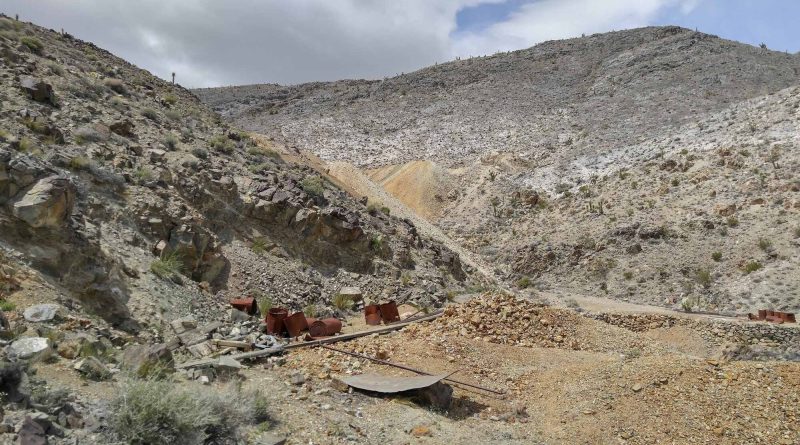
The Fremont Gold Mine occupies a prominent place in California’s mining history. Located within the renowned Mother Lode belt, the property was one of the state’s major underground gold producers before operations ceased during World War II, when the federal government ordered nonessential gold mines to close in favor of strategic mineral production.
Unlike many historic mines that have been abandoned, Fremont retains substantial infrastructure. The property spans more than 3,000 acres and includes two mine shafts, 14 adits, approximately 23 kilometers of underground workings and more than 43,000 meters of historical drilling. This existing foundation gives developers valuable geological data while reducing some of the uncertainty associated with greenfield exploration projects.
Lode Gold Resources recently published an updated mineral resource estimate that identified 1.11 million ounces of indicated gold resources and an additional 1.98 million ounces of inferred resources. Combined, the deposit contains roughly 3.1 million ounces of gold, positioning Fremont among California’s largest undeveloped gold assets.
The project’s timing is no coincidence. Gold prices have climbed sharply in recent years as investors sought safe-haven assets amid geopolitical tensions, inflation concerns and central bank purchases. Higher commodity prices can transform projects that were previously considered uneconomic into viable investment opportunities, particularly when developers can leverage existing infrastructure.
Even so, mineral resource estimates should not be confused with recoverable production. Resource figures represent geological estimates based on drilling and analysis, while the amount ultimately mined depends on engineering studies, recovery rates, operating costs, permitting and financing.
Modern mining bears little resemblance to the original Gold Rush
The California Gold Rush of 1849 was defined by individual prospectors searching rivers and streams for easily accessible placer gold. Today’s mining companies rely on advanced technologies that would have been unimaginable during the nineteenth century.
Modern exploration combines geological modeling, digital mapping, diamond drilling and laboratory analysis to define mineral resources with increasing precision. Underground mines also use automation, sophisticated ventilation systems and extensive safety protocols that have dramatically changed how gold is extracted.
The Fremont project illustrates this evolution. Current work focuses on engineering assessments rather than immediate production. These studies evaluate mine design, infrastructure requirements, processing methods and project economics before significant capital is committed.
Environmental considerations also play a far greater role than they did during California’s first gold rush. Mining companies must navigate comprehensive permitting processes covering water management, habitat protection, reclamation planning and community consultation. These requirements can take years to complete and often determine whether a project ultimately advances.
While these safeguards increase development timelines and costs, they also reflect broader expectations for responsible resource development that balance economic opportunity with environmental stewardship.
What the project could mean for California and the US mining sector
If Fremont progresses toward production, the project could generate meaningful economic activity for Mariposa County through construction, skilled employment and local business opportunities. Mining operations often create demand for engineering services, equipment suppliers, transportation providers and specialized contractors, extending economic benefits beyond the mine itself.
The project also arrives as governments place greater emphasis on domestic mineral production. Although gold is not classified as a critical mineral, renewed investment across California’s historic mining districts reflects broader efforts to strengthen domestic resource supply chains. Nearby exploration targeting zinc, copper, silver and other metals suggests companies are reassessing assets that had remained dormant for decades.
Investors, however, should remain realistic about the road ahead. Engineering studies represent only one milestone in a lengthy development process. Securing permits, raising project financing, completing feasibility studies and constructing mining infrastructure require substantial investment and can take several years before commercial production begins.
The renewed attention surrounding Fremont ultimately reflects more than rising gold prices. It demonstrates how advances in exploration technology, improved geological understanding and changing market conditions can breathe new life into historic mining districts. California’s legendary Mother Lode may never experience another rush resembling 1849, but its next chapter could prove equally significant for a modern mining industry focused on long-term resource development rather than instant fortunes.
Source