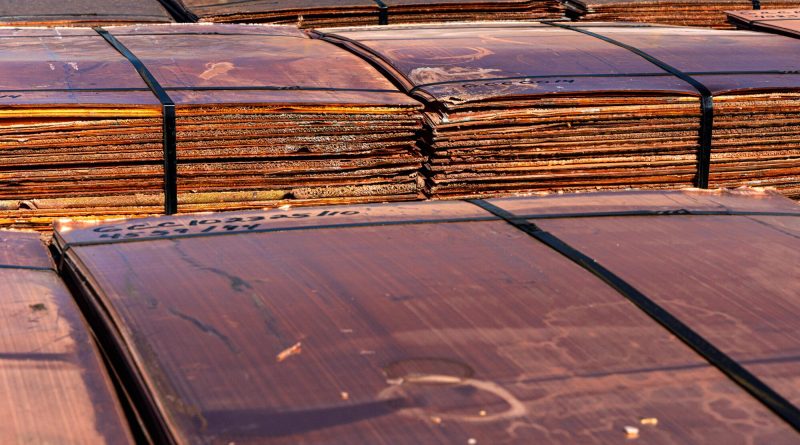
Copper overtakes iron ore as BHP’s biggest earnings driver
Subscribe to our free newsletter today to keep up to date with the latest mining and minerals news.
BHP’s annual profit rose 9% as record copper prices helped the metal overtake iron ore as the miner’s largest earnings source for the first time.
The Australian mining group reported attributable profit of $9.8 billion for the year ended June 30. Underlying attributable profit rose 30% to $13.2 billion, while group underlying EBITDA increased 27% to almost $33 billion.
Copper accounted for 54% of BHP’s underlying EBITDA. Its copper operations generated about $18.2 billion, up 48% from the previous year. Iron ore, long the main source of BHP’s earnings, generated about $14.7 billion.
The change matters beyond one set of annual results. Rising demand from electricity networks, data centers and industrial infrastructure is changing where large miners see future growth.
BHP produced about 2 million metric tons of copper for the second consecutive year. It plans to increase attributable copper production by as much as 40% between fiscal 2027 and 2035.
That puts copper at the center of a wider mining industry question: Can producers add enough supply to meet demand without allowing project delays, higher costs or falling ore grades to weaken returns?
Copper is changing the economics of BHP
Much of BHP’s latest earnings growth came from higher copper prices.
The company’s realized copper price increased sharply during the financial year. Its copper business also recorded an underlying EBITDA margin of 70%.
Higher prices have strengthened cash generation as BHP funds a large investment program. Free cash flow rose 83% to $9.8 billion, while net debt fell to $8.7 billion.
The company increased its full-year dividend to $1.72 per share, its highest annual payout in four years.
Copper also brings revenue from other commodities. Gold, silver and uranium produced alongside copper contributed $4.5 billion in revenue during the year, up 45%. These byproducts help lower the effective cost of producing copper at operations including Escondida in Chile and Copper South Australia.
Iron ore remains central to BHP. Its Western Australia Iron Ore business achieved record production and continues to generate significant cash.
But BHP’s earnings mix has changed.
That shift gives the company a strong reason to direct more spending toward copper assets. BHP expects capital expenditure to average about $11 billion a year over the medium term, with more than half of growth spending directed toward copper.
The strategy also reflects the high price of established copper mines. BHP has said acquiring existing assets can cost about five times as much as developing new supply from its own portfolio.
Internal development could therefore offer better economics, provided projects are delivered on schedule and within budget.
Power networks and data centers are adding to copper demand
BHP expects global copper consumption to rise from about 34 million metric tons a year to more than 50 million by 2050.
The International Energy Agency also expects strong growth. Its 2026 Global Critical Minerals Outlook projects copper will record the largest increase in demand by volume among the minerals it tracks, adding about 7 million metric tons through 2040.
Electricity networks are one reason.
Copper is widely used in power transmission, distribution systems, electrical equipment and industrial infrastructure. Investment in renewable generation, electric vehicles and grid expansion therefore increases demand for the metal.
Data centers are adding another source of consumption.
Artificial intelligence systems require large amounts of computing equipment and electricity. New data centers need substations, power connections, backup systems, cooling equipment and more network capacity.
This links growth in computing infrastructure to demand for industrial metals.
The IEA expects energy technologies to remain a major source of future demand growth for several minerals. For copper, electricity networks and newer technologies are likely to add further pressure on supply.
The supply side may struggle to keep pace.
The IEA estimates that expected copper supply from existing and announced projects could still leave a gap of about 25% against requirements under its stated policies scenario by 2035.
That does not guarantee persistent shortages or high prices. New projects, recycling, weaker demand or substitution could change the market balance.
It does help explain why companies with large existing copper resources are placing more value on developing them.
BHP now has to turn strong prices into lasting production growth
BHP enters this investment cycle with an advantage because it already operates major copper assets rather than relying only on acquisitions or undeveloped deposits.
Its portfolio includes Escondida in Chile, one of the world’s largest copper mines, as well as operations in South Australia. The group also has longer-term development opportunities elsewhere in its portfolio.
BHP expects attributable copper production to increase by as much as 40% between fiscal 2027 and 2035.
The path is unlikely to be smooth.
Production can fall in individual years because of ore grades, mine sequencing and operating conditions. Large mining projects can also take years to approve and build.
Execution will therefore matter as much as demand forecasts.
Copper prices above historical averages can support investment, but higher prices do not remove the physical limits facing the mining sector. New deposits may be deeper, lower grade or located in areas where water, power and transport infrastructure are limited.
Permitting and community agreements can add further time.
For BHP, the value of its copper strategy will depend on more than selling metal into a strong market. It must increase production while controlling development and operating costs.
The latest results show the scale of the opportunity.
Copper has already moved ahead of iron ore as BHP’s biggest earnings contributor. If demand continues to rise while new supply remains difficult to develop, miners with large, expandable copper operations could gain a lasting advantage.
BHP’s 2026 results suggest that shift is already visible in the earnings of the world’s largest listed miner.
Source