Triple Flag expands Australian footprint with Ravenswood acquisition
Subscribe to our free newsletter today to keep up to date with the latest mining and minerals news.
The race to secure exposure to high-quality gold assets is intensifying as royalty and streaming companies focus on long-life production rather than short-term commodity cycles. Triple Flag Precious Metals’ decision to commit US$440 million to a gold stream on the Ravenswood Gold Mine in Queensland reflects that shift, giving the company access to one of Australia’s largest gold operations while strengthening its long-term production outlook.
The transaction stands out because of both its size and its implications for mining finance. Investors continue to reward businesses that can secure predictable exposure to metal production without assuming the operational responsibilities of mine ownership. For Triple Flag, Ravenswood offers a combination of scale, jurisdictional stability and growth potential that is becoming increasingly difficult to secure.
The agreement also arrives as many gold producers seek alternative funding sources to support expansion programs. Streaming transactions have become an attractive option, allowing operators to unlock capital while preserving shareholder value and limiting reliance on traditional debt financing.
For Triple Flag, the deal strengthens an already diversified portfolio and supports higher long-term production targets. For the wider mining industry, it highlights the continuing appeal of Australia’s gold sector and the growing influence of royalty and streaming capital in project development.
How the Ravenswood transaction strengthens Triple Flag’s portfolio
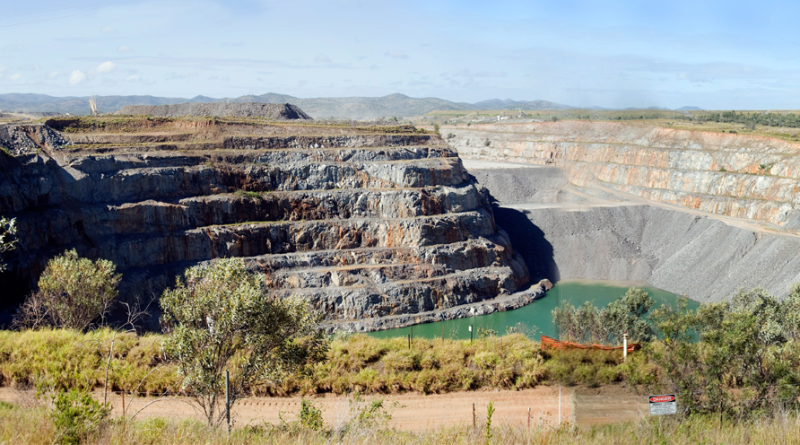
The Ravenswood stream provides Triple Flag with exposure to a mine that has established itself as one of Australia’s most significant gold assets. Located in Queensland, the operation has produced more than 4 million ounces of gold throughout its history and remains a cornerstone asset for its owners, EMR Capital and Golden Energy and Resources.
Under the agreement, Triple Flag will make an upfront payment of US$440 million in exchange for future gold deliveries from the operation. The stream is expected to begin contributing ounces during the third quarter of 2026, creating a clear pathway toward higher attributable production.
The strategic value of the transaction becomes apparent when examining Triple Flag’s revised outlook. Following the announcement, the company increased its 2030 guidance to between 150,000 and 160,000 gold equivalent ounces, up from its previous range of 140,000 to 150,000 gold equivalent ounces.
For royalty and streaming companies, incremental production growth often translates into significant long-term value creation. Because operating costs remain largely the responsibility of the mine owner, additional ounces can contribute disproportionately to future cash flow.
The transaction also deepens Triple Flag’s exposure to Australia, one of the mining industry’s most attractive jurisdictions. Political stability, established infrastructure and transparent regulation continue to support mining investment across the country. The addition of Ravenswood complements existing interests in assets such as Northparkes, Beta Hunt and Fosterville, strengthening the geographic quality of the company’s portfolio.
Jurisdictional quality has become increasingly important for investors. Mining assets located in countries with stable regulatory frameworks often command higher valuations and attract stronger investor interest. Ravenswood aligns closely with those priorities.
Why Ravenswood stands out among Australia’s major gold assets
The appeal of Ravenswood extends beyond its current production profile. The mine represents a significant transformation story that has unfolded during the past several years.
Since 2020, EMR Capital and Golden Energy and Resources have invested more than A$830 million into expanding and modernizing the operation. Those investments have established the foundation for substantial production growth, with annual output expected to exceed 200,000 ounces by 2028.
That trajectory is already becoming visible. Ravenswood produced approximately 134,000 ounces of gold during 2025, reflecting the operational progress achieved through recent expansion initiatives.
Scale remains one of the mine’s defining characteristics. Current proven and probable reserves total approximately 2.8 million ounces of gold, placing Ravenswood among Australia’s largest gold assets. Reserve size is particularly important for streaming companies because it provides visibility into future production and extends asset life.
The reserve base may represent only part of the opportunity. Large land packages supported by established infrastructure frequently create opportunities for additional exploration success and future resource conversion. For Triple Flag, that creates the potential for value beyond current reserve estimates.
Mining investors increasingly assess assets through the lens of optionality. A mine capable of extending its productive life through exploration can generate value well beyond initial expectations. Ravenswood’s scale and geological potential help explain why the asset attracted such a substantial streaming commitment.
The transaction also reflects broader confidence in the outlook for gold. Although commodity markets remain cyclical, long-term demand drivers continue to support interest in precious metals as both an investment vehicle and a portfolio diversification tool.
What the deal reveals about the evolution of mining finance
Streaming and royalty agreements have become a critical source of capital across the mining sector. Their growth reflects a broader shift in how projects are financed and how investors seek exposure to commodity production.
For mine operators, streaming transactions provide access to substantial capital without issuing new equity or relying solely on conventional project debt. That flexibility can be particularly valuable during expansion phases when funding requirements are significant and market conditions remain uncertain.
For streaming companies, the model offers exposure to production growth while avoiding many of the operational challenges faced by mine operators. Cost inflation, labor shortages, equipment disruptions and daily operational risks generally remain with the producing company.
This structure has created a distinct segment within the mining investment landscape. Companies such as Triple Flag compete for access to high-quality assets capable of generating predictable production over extended periods.
The Ravenswood agreement illustrates how competition for those assets continues to intensify. Large, long-life operations located in stable jurisdictions remain relatively scarce, particularly when they combine established production with meaningful growth potential.
As mining companies continue seeking efficient financing solutions, royalty and streaming capital is likely to play an even larger role in future project development. The model offers flexibility for operators while creating long-term growth opportunities for investors.
Triple Flag’s investment in Ravenswood therefore represents more than a single transaction. It reflects a broader trend reshaping the mining sector, where access to quality ounces is becoming just as important as access to capital. By securing exposure to one of Australia’s largest gold mines, the company has strengthened its position for the years ahead while reinforcing the strategic importance of streaming within modern mining finance.
Source:
Business Wire